
A Setting That Sells
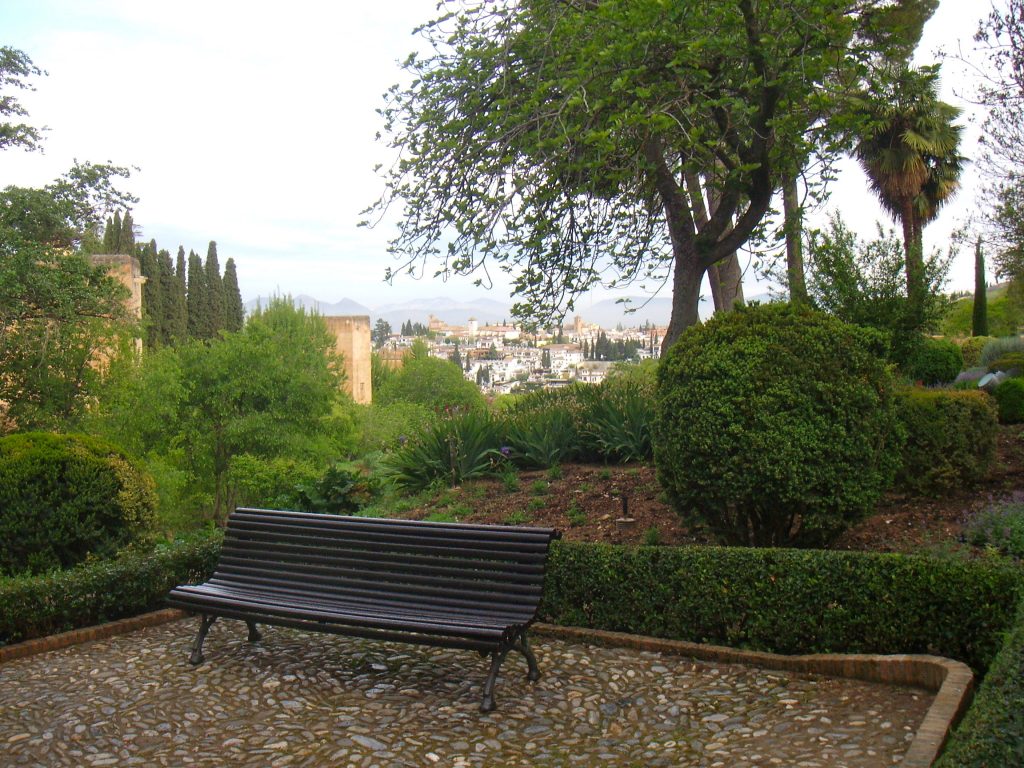
I love to read vibrant settings in stories, don’t you? They are those settings that make you feel like you’re right there, in the story, at the very spot where the story takes place. Recently I read Amber Stockton’s latest book, The Grand Design, and I appreciate her skill at showing the reader the setting in such a beautiful way.
Amber weaves the setting into her action and dialogue like a skilled artist. Using the five senses, you can see the flowers and almost smell their delicate aroma. You can feel the white painted wood on the massive porch of The Grand Hotel. You nearly touch the fabric on the character’s body. Snapshot by snapshot, she hones in on details that pull you deeper and deeper into the story. Well done, Amber!
Here are a few things I’ve learned about developing a setting that sells:
- Use all five senses in your scene development. Don’t settle for simply what you see. How does it smell? What does an object feel like? What do you hear in the distance? What does the meal taste like?
- Use at least one object in every scene that will put you in that time and place. This brings authenticity and realism to your story. Whether it’s a rolling pin used for making cookies or a pitchfork leaning against the barn, details like this will bring readers into the story.
- Use unique nouns and verbs that will make the scene crystal clear for the reader. Zero in on a close up shot of a scene and make it poignant.
- Set obstacles in the character’s path. What does the character need to overcome? An inward insecurity? An outward flaw? An actual obstacle such as the lack of money to travel or health challenges? What is the biggest challenge in your character’s life? Set those obstacles so clearly into the scene that readers have to find out how they solve their conundrum.
- Make the setting relatable, even if it’s in a different time and place. Everyone has to eat, whether they lived in the fifth century or today; let readers taste the hard bread and simple fare of that day. All of us live somewhere; describe it well. There are sounds of nature in every era; let the reader hear the sound of keening at an 19th-century Irish funeral. Everyone lives in a cultural setting that is unique in its own special way; let readers experience the quirks and lingo of the time and place.
Every reader longs for more. More that will awaken their senses, touch their soul, stir their emotions, and change their heart. They want to be transported into another time and place and learn from the lives of others, even if they are fictional characters who live across the street from them.
Many of us will never go to Ireland or cross the great Atlantic Ocean or live on an island. Most of us haven’t grown up in a family of eleven children in a one-bedroom Irish cottage. I want to let the readers experience those things as I develop my setting scene-by-scene. That’s what will make a setting that sells.
How do you develop your settings? I’d love to know!
Get Smart
 “Apply your heart to instruction and your ears to words of knowledge, Proverbs 23:12.
I’ve always encouraged my children, friends, students, and others to be “lifelong learners.” Whether you’re my 92-year-old Mom, a young mother, or a new or seasoned writer, I encourage you to never stop learning and growing in your spiritual, personal, and creative life.
This week I’m teaching three writing workshops at the Colorado Christian Writers Conference. I love imparting what I know about writing to those who sacrifice their time and money so they can continue to learn all they can about the craft of writing. I respect each and every one of them, and I always learn something in the process of teaching. I want to apply my heart to instruction, even when it comes out of my own mouth.
It truly is a daunting task to “apply your heart to instruction.” This is especially true in today’s word-saturated society where you have to continually sift out the good from the bad, the truth from a lie, the imposter from the real, even in the Christian world. In the past several years of mentoring, coaching, critiquing, and editing Christian writers’ work, I’ve found that unbiblical views too often creep into writing more and more as the years go by.
So as I teach on the importance of having a biblical view of the world and of writing, I’ve learned that consciously applying discernment becomes key to knowing the difference between biblical truth and all the rest of the untruths and half-truths out there. I urge not only writers but everyone to be on guard and stand against the lies of the world, whatever they may be.
To do so, God’s word must be our plumb line, for only then will our speaking, writing, and interacting with others bring life and make a difference in our world. Whether you’re teaching your children, writing the next great American novel, or sharing your heart with a friend, truth matters, and applying your ears to “words of knowledge” is so important.
Discern carefully between what God says about things and what the world tries to promote. Reject the things that pull you away from truth. Edit out words that don’t agree with the Bible. Fight the good fight of continuing to apply your heart to God’s instruction and listen for godly knowledge. Then your lifelong learning will bear fruit that will last through eternity.
How do you apply your heart to instruction? I’d love to know!
Sweet Words
 “How sweet are your words to my taste, sweeter than honey to my mouth!” Psalm 119:103
I recently had the privilege of doing several workshops for the Evangelical Press Association Convention. One of those workshops was a discussion about applying a biblical worldview to your writing and editing. In two weeks, I’ll be giving the same workshop at the Colorado Christian Writers Conference.
It’s true! God’s word is sweet, even when we read words of conviction or correction. Through His word we find understanding, wisdom, and truth. And once you get a taste for those sweet words and let them become a part of you, “from the overflow of his heart, his mouth speaks,” Luke 6:45b. Or writes.
Yet in today’s secular world, unbiblical views can creep into our thinking and writing far too easily. In the past year I’ve edited both articles and books from Christian authors who had obvious unbiblical views. I’m sure they weren’t trying to mislead anyone or send their readers away from God’s truth; it’s just that the world’s views snuck into their thinking and writing without them even noticing it. When I discussed their faulty thinking and and writing, and then showed the scriptural truth of it, these authors were embarrassed, even appalled that they didn’t see their errors.
We are simply bombarded from every direction with unbiblical views. Yesterday as I walked through the airport on my way home I saw several marketing messages that were decidedly unbiblical. On Facebook, folks are posting “send healing energies to Nepal” and other new age ideas every day, many from Christian sources. And on TV and in movies? Well, you get all kinds of unbiblical messages.
The point is, as believers, we not only need to be vigilant to consciously reject the unbiblical worldviews that come our way, but we also need to fill our minds and hearts with His sweet words. Only then will you taste and see that the Lord is good and then speak and write words that lead to eternal life.
What unbiblical worldview have you seen creep into your world lately? I’d love to know.
Acknowledging Words
 “Let us acknowledge the Lord; let us press on to acknowledge him. As surely as the sun rises, he will appear; he will come to us like the winter rains, like the spring rains that water the earth,” Hosea 6:3.
I must admit that it’s been a long time since I’ve read Hosea. It’s the story of God’s relentless love for sinful man, and that time in history sounds a lot like today.
Israel had turned away from God. Sexual sin, homicide, theft, and all kinds of wickedness ran rampant. Sound familiar? The story shows God’s agony over His children and implores them to return to Him. “I have been the Lord your God ever since the land of Egypt; you know no God but me, and besides me there is no savior,” Hosea 13:4.
But God gave Hosea a tough task—to marry a promiscuous woman and be faithful even when she was not. He “shows” as well as “tells” how Israel has been unfaithful to their God so that they would understand how betrayal feels.
So what? Hosea begs his people to “acknowledge the Lord” and keep on acknowledging Him. So should we!
In this ever-secular society, it’s easy to shrink back from acknowledging the Lord, His ways or share His truth, the work He is doing in your life, or even what He would think of a governmental decision or a movie or a song or the curriculum our children are being taught. Like those Old Testament believers, we are tasked to use our words to acknowledge the Lord, whether in a conversation or in our writing. We must. If we don’t, what will prevent us from becoming like Israel, a people lost and forsaken.
So whenever you get the opportunity to acknowledge God, seize it like your life depended on it. Because it does.
How do you acknowledge the Lord in every day circumstances?
Wise Words

“The words of the reckless pierce like swords, but the tongue of the wise brings healing,” Proverbs 12:18.
I recently had a conversation with someone whose words were full of wisdom, healing, kindness, and life. We were discussing a difficult situation that she needed to deal with, one that could not only harm her relationship with that person but also harm her relationships with many if she wasn’t wise about how she was dealing with the situation. It was obvious to me that she had prayed, researched her options, and counted the cost, even before we spoke. And as she asked for my counsel, she measured her words carefully so she didn’t divulge unneeded details or expose who the person was. During our conversation, she was wise.
What do wise words look like in a world of foolishness, recklessness, and one-upmanship? In a world where gossip and moral relativism run rampant? In today’s world, it’s not easy to discern and it’s almost counter-cultural to speak with godly wisdom. Yet it is possible.
Wise words are those that, even when you have to deal with tough things, whether in speaking or writing, they bring biblical wisdom to the situation, even when we don’t quote scripture and verse. They are not “reckless” and they don’t “piece like swords” as the scripture so aptly says. And when we write wise words, they come off the page and go straight into the reader’s heart.
In the novel I’m working on, one of my characters has a decisively unwise tongue. She loves to gossip and prattle and tell tales. And she often gets into trouble because of her reckless mouth. She shows the readers what this Scripture is talking about, the folly of it, the hurt it can bring, the harm it can do. But can she truly change? That’s the question at hand for her and for us.
We all want our words to be wise, healing, and helpful. We want to bless others by the things that we say or write. But in a world full of way too many words, taming our tongue (or our pen) is something in which we all need the Father’s help and guidance. Only then can we truly have “wise words.”
How do you chose to only speak (or write) wise words?
Working Words

“May the favor of the Lord our God rest on us; establish the work of our hands for us—yes, establish the work of our hands,” Psalm 90:17.
Can God’s favor really rest on us as we work? Now that’s a big thought, isn’t it? Yes, it can!
Every morning before I start my day, I ask God to help me write or speak or help others write or to do whatever my day holds. This is what we should do, but do we do it? I admit that sometimes I forget, but I never want to take it for granted or think that my skills and abilities are enough. I need Him to establish the work of my hands. I need His favor.
But what does that look like? For me, it’s the knowledge that I’m on the right track with what He wants me to say, do, or write. It’s feeling His favor as I write a scene that comes to life on the page or develop a character that seems so real that I become “friends” with him or her. It’s finding that perfect word that describes something or solving a long-standing glitch in a storyline. It is knowing that the Facebook posts or Tweets or the words I speak over lunch with a friend are timely and will be a blessing. It’s even finding a craft book or blog that helps me learn something new. The truth is, I simply can’t do all this on my own; I need His favor.
I love working with words, but I love working with God who gives me those words even more. For me, it’s like co-authoring or collaborating with the Perfect Author, and it’s what gets me up every morning to plod away at my computer for hours on end. And at the end of the day, it’s a blessing to know I’ve spent my time in the favor of God and that He has established the work of my hands.
And you? Whether you’re a stay-at-home mom, a business owner, a waitress, an executive, or a check-out clerk, He desires to establish the work of your hands so that you feel the joy of His favor. There’s nothing like it!
How do you feel His favor as you work? I’d love to know!