
Acknowledging Words
 “Let us acknowledge the Lord; let us press on to acknowledge him. As surely as the sun rises, he will appear; he will come to us like the winter rains, like the spring rains that water the earth,” Hosea 6:3.
I must admit that it’s been a long time since I’ve read Hosea. It’s the story of God’s relentless love for sinful man, and that time in history sounds a lot like today.
Israel had turned away from God. Sexual sin, homicide, theft, and all kinds of wickedness ran rampant. Sound familiar? The story shows God’s agony over His children and implores them to return to Him. “I have been the Lord your God ever since the land of Egypt; you know no God but me, and besides me there is no savior,” Hosea 13:4.
But God gave Hosea a tough task—to marry a promiscuous woman and be faithful even when she was not. He “shows” as well as “tells” how Israel has been unfaithful to their God so that they would understand how betrayal feels.
So what? Hosea begs his people to “acknowledge the Lord” and keep on acknowledging Him. So should we!
In this ever-secular society, it’s easy to shrink back from acknowledging the Lord, His ways or share His truth, the work He is doing in your life, or even what He would think of a governmental decision or a movie or a song or the curriculum our children are being taught. Like those Old Testament believers, we are tasked to use our words to acknowledge the Lord, whether in a conversation or in our writing. We must. If we don’t, what will prevent us from becoming like Israel, a people lost and forsaken.
So whenever you get the opportunity to acknowledge God, seize it like your life depended on it. Because it does.
How do you acknowledge the Lord in every day circumstances?
Wise Words

 “The words of the reckless pierce like swords, but the tongue of the wise brings healing,” Proverbs 12:18.
I recently had a conversation with someone whose words were full of wisdom, healing, kindness, and life. We were discussing a difficult situation that she needed to deal with, one that could not only harm her relationship with that person but also harm her relationships with many if she wasn’t wise about how she was dealing with the situation. It was obvious to me that she had prayed, researched her options, and counted the cost, even before we spoke. And as she asked for my counsel, she measured her words carefully so she didn’t divulge unneeded details or expose who the person was. During our conversation, she was wise.
What do wise words look like in a world of foolishness, recklessness, and one-upmanship? In a world where gossip and moral relativism run rampant? In today’s world, it’s not easy to discern and it’s almost counter-cultural to speak with godly wisdom. Yet it is possible.
Wise words are those that, even when you have to deal with tough things, whether in speaking or writing, they bring biblical wisdom to the situation, even when we don’t quote scripture and verse. They are not “reckless” and they don’t “piece like swords” as the scripture so aptly says. And when we write wise words, they come off the page and go straight into the reader’s heart.
In the novel I’m working on, one of my characters has a decisively unwise tongue. She loves to gossip and prattle and tell tales. And she often gets into trouble because of her reckless mouth. She shows the readers what this Scripture is talking about, the folly of it, the hurt it can bring, the harm it can do. But can she truly change? That’s the question at hand for her and for us.
We all want our words to be wise, healing, and helpful. We want to bless others by the things that we say or write. But in a world full of way too many words, taming our tongue (or our pen) is something in which we all need the Father’s help and guidance. Only then can we truly have “wise words.”
How do you chose to only speak (or write) wise words?
Working Words

 “May the favor of the Lord our God rest on us; establish the work of our hands for us—yes, establish the work of our hands,” Psalm 90:17.
Can God’s favor really rest on us as we work? Now that’s a big thought, isn’t it? Yes, it can!
Every morning before I start my day, I ask God to help me write or speak or help others write or to do whatever my day holds. This is what we should do, but do we do it? I admit that sometimes I forget, but I never want to take it for granted or think that my skills and abilities are enough. I need Him to establish the work of my hands. I need His favor.
But what does that look like? For me, it’s the knowledge that I’m on the right track with what He wants me to say, do, or write. It’s feeling His favor as I write a scene that comes to life on the page or develop a character that seems so real that I become “friends” with him or her. It’s finding that perfect word that describes something or solving a long-standing glitch in a storyline. It is knowing that the Facebook posts or Tweets or the words I speak over lunch with a friend are timely and will be a blessing. It’s even finding a craft book or blog that helps me learn something new. The truth is, I simply can’t do all this on my own; I need His favor.
I love working with words, but I love working with God who gives me those words even more. For me, it’s like co-authoring or collaborating with the Perfect Author, and it’s what gets me up every morning to plod away at my computer for hours on end. And at the end of the day, it’s a blessing to know I’ve spent my time in the favor of God and that He has established the work of my hands.
And you? Whether you’re a stay-at-home mom, a business owner, a waitress, an executive, or a check-out clerk, He desires to establish the work of your hands so that you feel the joy of His favor. There’s nothing like it!
How do you feel His favor as you work? I’d love to know!
He’s Got a Plan
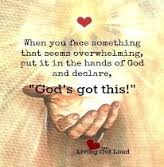 I’m so glad God has a plan for each of our lives. His purpose, His will, and His plan for my life have taken lots of twists and turns over the years. Ultimately, it’s always been good (although it didn’t always feel so good) whether it’s been in my family life, my work life, my church life, or my personal life.
Although my family was tainted by heartache, God’s plan for family life has a special purpose and framework. You get married, have children, raise them to love God and be productive people, and then watch them start their own families. What a beautiful plan God created for the family unit, and I’m blessed to experience it now.
In my work life, I’ve gone from being a preschool teacher to a grade-school teacher to a missions curriculum writer to an editor and editorial director to an author and now a full-time freelance writer/editor/writing coach. Whew! It can make my head spin just to think about it all, but I’ve loved every season the Lord gave me in these unique and wonderful opportunities. Now, as I work on my novel, I continue to trust in His plan for my writing life.
In my church life, though I’ve been a part of several churches over the years, in every one I’ve been blessed and made a point to serve wherever I could as well as be a part of a small group when I could. Each time I’ve had rich, and sometimes stretching, experiences that have helped me to grow and mature in Christ.
And personally? Oh what a treasure each of my friends and family have been—from childhood until now! Some have been lifetime friends; other have passed through my life like a fragrant breeze. Some have shaken me to my core and caused me to kneel at His feet in tears, while others have taught me the meaning of humility, contrition, and redemption.
Through all the journey of discovering His will and purpose for my life in each season of it, I have found that He, alone, is the One who can work it all out for my very best, and He will for you, too. May your discovery be as amazing as mine has been, and may you find Him faithful in every season of it.
“In Him we were also chosen, having been predestined according to the plan of Him who works out everything in conformity with the purpose of His will,” Ephesians 1:11.
How have you seen God lead and guide you into His plan and purpose?
Switching Hats
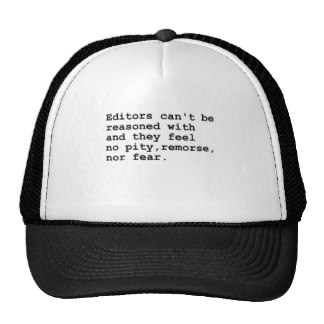 Since I spent a good deal of my professional career as an editor, switching hats from a writer to editor is as simple for me as standing up, walking away from my computer, getting a snack, and returning as “Editor-in-Chief.”
Shazaaam!
I know that, once I’m done writing my draft manuscript, there’s a whole lot of work to be done. And I’m so grateful that I can turn off my writing self and disengage from the emotional connection I have to the words I put on paper. I know that many, if not most, writers struggle with this rewriting, revising, and editing phase, so that’s why I serve others as a freelance editor from time to time.
So here’s a glimpse into the editing journey I experience. I hope it will give you some tips, ideas, and inspiration for switching hats and putting on your own editing hat.
Before I start editing, I pray for wisdom, and I give the draft some time and space. I call it “letting it get cold.” Then, when I’m ready to tackle it head on, I first do a spell and grammar check and deal with any of the obvious. After that, I look for anything that needs slashing, cutting, adding, deleting—well, you get the idea.
I view the editing process as a unique form of creating. It’s like when my husband creates something from a raw piece of wood—cutting away the unnecessary, sanding off the rough edges, and finishing it with a lovely stain to make it a beautiful masterpiece.
As I edit, sometimes I rewrite a whole section and make the story a lot better. Other times I delete whole paragraphs, scenes, or sections. Sometimes I dig down in the weeds and use my thesaurus to find better words.
Many times I have to be brutal with my work; other times I have to hold it loosely and know that another pair of eyes and a different brain—my craft group, beta readers, agent, and/or editor—can see what I can’t see. I know that every writer has weaknesses, and I am no different. I can end up with pet words that I use too much. Or I can get caught up in a scene and wax way too elegantly on a point I’m driving home rather than keeping it short and sweet.
Sometimes I’m simply so exasperated with my writing that I get discouraged. Or I doubt my abilities and inspiration. That’s when I take some time with the One who gave me the ideas and talents and abilities in the first place. And He always finds a way to reorient me and restore my vision.
So when you have to switch hats, put on your editor’s hat with a positive attitude. Hold our work loosely and let the Holy Spirit show you the flaws and the challenges. And be open to change whatever needs changing. You’ll be glad you did.
How do you switch from the writer to the editor hat? I’d love to know!
Turning Scars Into Stars
 The Merriam-Webster dictionary says the word vulnerable means that one is “open to attack, harm, or damage; easily hurt or harmed physically, emotionally, or mentally”. But vulnerability also means that one is open and sensitive and transparent. Since I’ve already been through the “hurt” part, my heart’s cry is to let my characters be open and transparent enough help others through their hurts simply by being vulnerable and sharing a story of loss, pain, scars…and stars!
In my first two non-fiction books, Countdown for Couples: Preparing for the Adventure of Marriage, and The ReMarriage Adventure: Preparing for a Lifetime of Love & Happiness (Tyndale Publishers), my husband and I were quite transparent about the mistakes we made in our first marriages and the hard lessons we learned through the pain, hurt, and scars.
In my Irish Quilt Legacy, I was repeatedly challenged to be vulnerable, for the story is loosely based on my life and my family heritage. As I plotted out my dual story line, I toyed with the idea of deleting half the story line and running for the hills every time I included a bit of my story. I knew I’d have to relive some of the scars of my past, revisit some of the pain, and rehearse some of the most emotionally traumatic moments of my life. And I didn’t want to go there.
But I put it down on paper and then I spent hours, days, weeks, and months facing some of the scars that I prayed would turn into stars…stars that could light the way toward healing for some of the readers who have faced similar pain and scars.
In the process, I fell in love with my characters and chose my words carefully. I wept with those in my story who wept, and I laughed when they did. I held my breath when I didn’t see the answer to a problem, and I rejoiced when God showed up and overcame obstacles that seemed insurmountable.
In a small way, I lived it all over again. I revised it, edited it, prayed over it, and sent it to my agent. And I’m waiting (patiently?) for a publishing contract. But even in the waiting, I feel a little bit vulnerable.
Friends and family will see a part of my life that I’ve conveniently put in a box on the highest shelf, way back in the farthest corner of my closet. Readers, known and unknown, will see glimpses of my character’s messed up life and broken heart and wonder just how much of that is me. Have I been too open, too exposed, too vulnerable? Though that’s the price of vulnerability, I pray it pays off by connecting with and bringing hope to my readers.
How vulnerable are you as a writer, a friend, a person? I’d love to know!