
Celebrating the Adventure
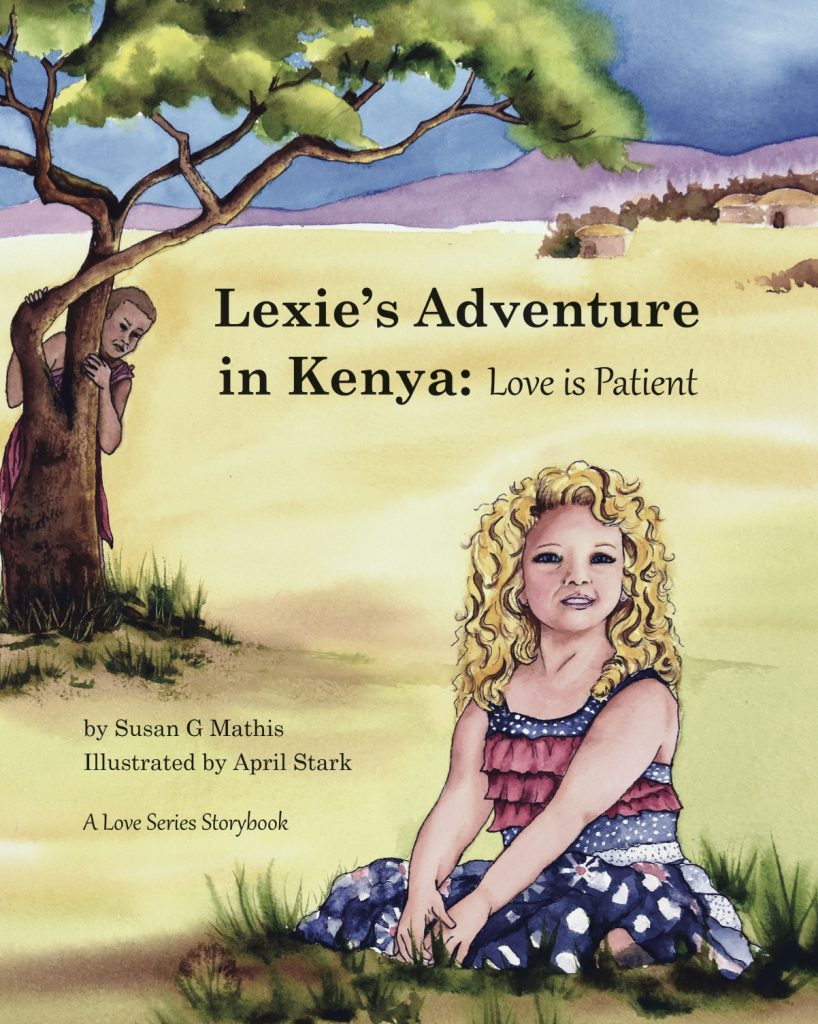
 There are so many things to celebrate as I launch my first indie publishing adventure. Most of all, I want to celebrate YOU—all those who have stood with me, encouraged me, read my blogs, and spurred me on. It’s been a long and winding road, but you have been there, and I appreciate it more than you can ever know.
The work of writing is often a lonely one, but when people like you connect with me—whether through a blog post comment, a FB “like”, a retweet, or personal interaction of some kind—well, that makes my day, week, and sometimes my month! Thank you.
To my husband who gives me the space and time to keep on keeping on. Thank you!
To my illustrator who made the story come alive with her beautiful art. Thank you!
To my designer who puts it all together into a wonderful thing called a book. Thank you!
To my picture book critique group who massaged the story over and over again until it was just right. Thank you!
To my writing colleagues who faithfully gave me honest feedback, even when that feedback was tough. Thank you!
To my friends and family who have inspired me, cheered me on, and never given up on me. Thank you!
To all who encourage me through their texts, emails, or social media contacts. Thank you!
To all you non-writers who just don’t get why I spend my days and years creating “stuff” without criticizing. Thank you!
To everyone who doesn’t say, “Why aren’t you published yet?” Thank you!
So now, if you haven’t had a chance to check it out, here’s the link: http://www.amazon.com/Lexies-Adventure-Kenya-Love-Patient/dp/0692686630/ref=sr_1_3?s=books&ie=UTF8&qid=1460662300&sr=1-3&keywords=Lexie%27s+Adventure+in+Kenya (There’s also a hardback and ebook edition). I hope you and the children in your life enjoy it, and I’d be so honored if you would pass on the word and write a review.
Thanks again! What do you think? I’d love to know!
Support an Author
 I recently chatted with a friend about the release of my first picture book, Lexie’s Adventure in Kenya: Love is Patient. She said, “I want to support your work, Susan. What a great book! What can I do to help?”
I was tongue-tied. Besides stating the obvious, “Buy my book!” I just wasn’t sure what to say. After pondering that conversation, I now have a lot of ideas about how to help your author friends, and for all you bookies out there, here’s what I later told her:
- Buy the book. Well, duh! But today, it’s not that simple. Consider pre-ordering the book, and be sure to buy it new. Buying a used book doesn’t count as a sale for the author. And to make it easy, here’s the link: http://www.amazon.com/Lexies-Adventure-Kenya-Love-Patient/dp/0692686630/ref=sr_1_3?s=books&ie=UTF8&qid=1460662300&sr=1-3&keywords=Lexie%27s+Adventure+in+Kenya.
- Buy the book as a gift for someone. Birthdays, holidays, baby showers, engagements, weddings. You support your author friend and give a special gift to a friend. That’s an awesome two-fer.
- Find the author’s Facebook Fan page and click “like”. You make a personal connection and help grow your author’s numbers, which is critical for the author’s future book sales. Here’s my page: https://www.facebook.com/AuthorSusanGMathis/
- Follow your author friend on Twitter. Those crazy numbers do matter, and besides, your author may have some interesting things to tweet. Here’s my Twitter page: https://twitter.com/@SusanGMathis
- Write a review on Amazon.com and then copy and paste it on Goodreads, the author’s website, CBD.com, etc. It only takes a few minutes and it’s one of the most helpful gifts you can give an author.
- Talk about it and share the news. Share any news the author mentions on Facebook, Twitter, Goodreads, etc. Mention that your friend’s book is great or it would make a great gift or whatever.
- Share blog posts. Help the author by sharing a blog post about the book. Also, don’t forget to comment on blogs. Too few readers ever do.
- Attend a book release party or any author event. If you’ve already purchased the book and hear about a book signing, go and ask the author to sign it. It’s a lonely world out there, and authors love to meet their readers.
- Request a copy at the library. Libraries often purchase books their patrons request.
- When you visit a bookstore, ask where the book is located rather than finding it yourself. If they have it, face the book out to make sure it’s noticed. If the store doesn’t have it, suggest they carry it, touting the author and the book.
- Read the book in public. Take it with you when you visit a friend, on a plane, at the doctor’s office…wherever. People notice what people read.
- Leave it visible in your home for your friend’s to notice.
- Connect authors to people who can help them. Media contacts such as TV, radio, magazine, or other such personalities can boost an author’s visibility quickly. If the author is a children’s author, connect them to teachers or children’s pastors. A word to the wise: be ready with a specific statement about the book not just “My friend wrote a book.” Read the back cover copy and use that to describe the book to your contact—that’ll make them interested. You’ll build a special relationship with the author if you take the time to do this.
I hope this helps you, not just for my books, but also for all the authors you will meet along the way. Your author friends will love you for it!
How do you help authors? I’d love to know!
The Plunge into Publishing
 Indie publishing has become quite a phenomenon, and I never thought I’d give it a go. But after lots of research, I’ve decided to take the plunge.
Several years ago I wrote a children’s picture book series called The Love Series. I had spent nine years teaching and then five years writing missions curriculum. I was doing my capstone project for a university degree, and I wanted to write something to help young children discover God’s beautiful and diverse world while learning a 1 Corinthians 13 principle.
So I dusted off that project, and I edited and edited and got lots of feedback from my picture book critique partners and other publishing colleagues. Then, after searching for an illustrator, turning down two artists, and finally finding the perfect person to illustrate my book, I began the journey of publishing.
What was truly a blessing is that my artist was right under my nose all the time! I’ve known April for over 20 years, and she grew up as a missionary kid so she has the same heart for the world as I do. We were a perfect match, and I was once again reminded how God works in such beautiful ways.
I chose my granddaughter as the model for the main character, and what fun that was to see her act out the different scenes in the photos I gave to April to work from. And then I got to watch my artist illustrate the scenes so beautifully. April’s work exceeded my hopes and expectations, and her beautiful watercolor illustrations are just perfect for the book.
Needless to say, I’m beyond excited to send it to our designer, and I can’t wait watch it come to life, little by little. In a few weeks, our very first picture book will become a reality and be available on Amazon as well as through Ingram. Want to know more?
Lexie’s Adventure in Kenya: Love is Patient tells the story of a little girl and her family who travel to Kenya, Africa, to visit missionaries and the Maasai tribe. When Lexie meets a mischievous boy who becomes a bully to her, she learns that “love is patient.” With The Love Series, children can learn how to live out 1 Corinthians 13 principles while they enjoy adventures around the globe.
I’ll be sharing more about this fun adventure in the weeks to come, and I hope it will bless you as it’s blessed me.
What new projects are you working on? I’d love to know!
Have you read a Blook?

 The term “blook” was a runner-up for the 2006 Word of the Year, yet it’s not talked about very often. However, you may be surprised to discover that you may have even read a blook without knowing it. I have.
A blook is a bunch of blogs that are made into a book, whether printed or as an e-book. Basically, the author takes a series of her blogs that are about one topic and that might be something people would enjoy reading, and then she collects them into one volume, carefully arranges them, and diligently edits them. Then the author puts them all together to make a blook. It’s happening more and more these days with the ease of self-publishing, and it can be a valuable read, if done well.
I’ve been following Nina Amir http://howtoblogabook.com/tag/nina-amir/ who blogs about blogging a book, and she challenges writers to do it with excellence. Unfortunately, I have to admit that there are many more blooks that are very poorly done. They are a hodge-podge of disjointed thoughts that are unedited and haphazardly compiled. Frankly, such poorly done work is a waste of the reader’s time, and they are the blooks that give this genre a bad name.
Yet I recently read a quick-read, little e-book that happened to be free. When I got to the end of it, I was surprised to find out that it was a compilation of the author’s blogs. It turned out to be a good, fast read, and I was glad I hadn’t judged the blook by its genre’s reputation. The blook actually made me want to check out the rest of the person’s blog, and I signed up to follow her. Rather clever marketing ploy, don’t you think?
Have you read a blog recently? Did you enjoy it? I’d love to know!
Make Your Days Count
 I’ve been visiting with my soon-to-be 94-year-old mother, and her years of wisdom and experience always seem to balance me and help me reorient myself in this busy world. When I mentioned how fast this year is flying by and how busy my schedule is, she just smiled, shared her wisdom, and aligned my thinking. I thought you might enjoy hearing that wisdom, so here are her secrets to making your days count.
- Keep God First. Start every day with prayer and surrendering your day to His plans. Entrust that day into His hands for even when times are tough, He will guide you through every situation.
- Stay healthy. Each of us knows what unhealthy habits we might have. Too little sleep? Too much junk food? Too little exercise? Take care of your body and your body will take care of you.
- Know why you do what you do. Look at your schedule and assess why those items are on your calendar and/or if they need to be a part of your day. Whatever it is, it needs to be important to you, enough that you will be glad you did it when the day is done. Life is too short to waste time on non-profitable things.
- Just say no. Learn to say no to things that are a waste of time and don’t reasonably fit into your schedule. There are so many time wasters, including people who can waste your time. I must admit that too many lunch dates, social media, and searching for the best shopping deals can be a few of my time wasters.
- Calendar corrections. When you turn the calendar to the next month (or even to the next week), take a little time to review the past week/month and make corrections to the upcoming week/month. Did you have too many lunch dates? Too little workout time? Watching too much TV or movies? Going to too many social events? Tweak your schedule to correct such slips.
- Discourage distractions. What are your three worst time wasters? How can you shorten that wasted time or eliminate it altogether? Write them down and be careful not to get caught up in those distractions. I actually set an alarm when I get on my social media accounts so I don’t get swept up in them.
- Eliminate negativity. Most of us have that little voice nagging at us, telling us all the things we do wrong, all the ways we’ve failed at this or that, or all the weaknesses we have. Fix what you need to fix, but reject that critical voice inside you—or those critical voices from others who just can’t keep from keeping their own negative opinion to themselves.
What can you add to Mom’s 94 years of wisdom? I’d love to know!
Sabbath Rest
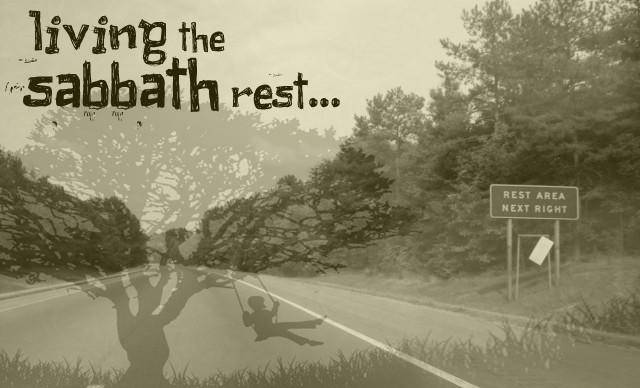
 There was a good reason that God invented the Sabbath, and I think that’s doubly important for writers. Our minds never stop. We often feel driven to do, write, be. We’re always pondering, dreaming, thinking. But we need to stop and take some time to honor the Sabbath as well as our body, mind, and spirit.
- Rest your body.
Get your sleep. Take time to do—dare I say it?—nothing. Just sit. Just relax. Our culture is frantically pushing us to the point of craziness and so does the publishing industry.
Busy is not the best.
- Rest your mind.
I have a notebook beside my bed because my mind often doesn’t stop at night. I wake up and have an idea about a character, a plot point, a setting detail—whatever. Without it, I’ll ponder it and lose sleep. If I write it down, I can come back to it later.
Sometimes we need to rest our mind for awhile and just stop and daydream. Stop checking Facebook. Stop watching TV. Just stop.
Let our poor overworked brains rest.
- Rest your spirit.
Ever watch children play with abandon? Their spirits are unencumbered and free to enjoy life. We should play too.
We get too serious, too determined, too competitive, too driven. Sometimes we just need to take some time to enjoy watching a bunny hop around our yard or take a walk and enjoy the beauty of nature or lie in the grass and play the cloud game. It reignites our creativity and energizes our spirit.
So how do I take a Sabbath rest? Hope these ideas might help you too.
- Besides going to church, I try to stay off my computer (unless, of course, I can skype with the grandchildren—then all bets are off!). I avoid social media, writing, or doing anything connected to work.
- I try to do something in nature—take a walk, sit in the yard, etc.
- I enjoy on a nice meal or just a special dessert.
- I spend some special time with my wonderful husband.
- Sometimes we spend time with friends.
- I often call someone that I haven’t talked to in awhile.
- I read or watch TV for pleasure not for research (i.e. work).
- I spend some time praying for the upcoming week.
How do you take a Sabbath rest? I’d love to know!